Loose aggregate, broken road edges, construction debris and gravel dropped by trucks can turn Delhi’s faster roads into repeated impact zones for your car’s front end. You will be able to judge what PPF can realistically stop, choose the panels and film specifications that matter, and decide whether its cost matches your driving pattern.
Key takeaways
- PPF absorbs impacts that would otherwise chip exposed paint.
- Prioritise the bumper, bonnet edge, mirrors, front fenders, and A-pillars.
- Choose film by thickness, warranty terms, adhesive quality, and installation standards.
- PPF suits frequent highway driving; coatings cannot stop stone impacts.
How Delhi Road Debris Turns Into Paint Damage
Delhi roads create a meaningful stone-chip risk because loose material is repeatedly thrown at forward-facing panels, especially where traffic moves quickly. Common sources include:
- Loose aggregate left after resurfacing
- Broken road shoulders
- Active construction zones
- Gravel falling from uncovered trucks
- Flyover approaches with damaged or uneven surfaces
- High-speed expressways carrying fast-moving traffic
Speed increases impact energy: a stone striking at higher velocity hits harder, so the front bumper, bonnet edge, headlights and mirrors face repeated impacts rather than one isolated event.
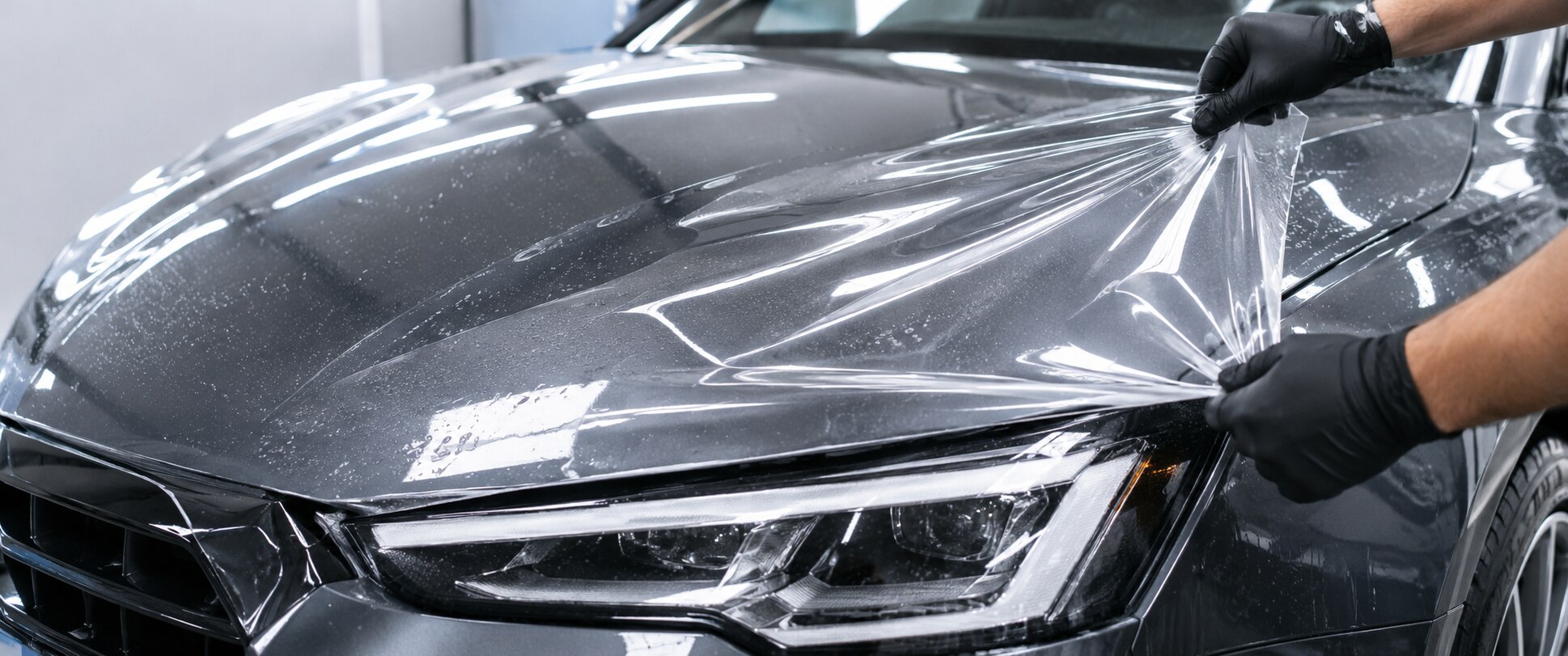
Paint protection film is a sacrificial polyurethane layer between the road and your paint. Its flexible structure absorbs and spreads part of the impact, while its surface resists abrasion from small gravel, sand and ordinary road debris. That is the core of ppf for road debris protection.
PPF does not make paint chip-proof. A large or sharp stone can cut through it; a high-energy strike can dent the panel; and a collision, deep gouge or debris hitting an uncovered area can still damage paint.
PPF also does not prevent dent damage or collision damage because it protects the surface, not the metal structure beneath it.
The practical car ppf benefits for stone chips in delhi are fewer small impact marks and less severe damage when they occur. It is risk reduction, not a guarantee that every mark will be avoided.
Which Panels Should You Protect First?
Protect the front bumper before the bonnet. Stones thrown by vehicles ahead rise into the bumper and lower grille area, so bonnet-only PPF leaves a major impact target exposed to the same debris.
The highest-risk zones are:
- Front bumper, bonnet leading edge and front fenders: they face direct impacts and spray from moving traffic.
- Side mirrors, headlights, A-pillars and roof leading edge: these catch redirected gravel and debris at speed.
- Rocker panels and door cups: these face side-spray, grit and fingernail scratches rather than the heaviest forward strikes.
Targeted panels suit an older, low-use car or a driver who wants to protect only the most exposed paint. Partial-front coverage usually combines the bumper, bonnet front section, fenders and mirrors; it costs less initially, but its visible boundary can collect dirt and leave adjacent paint vulnerable.
Full-front coverage extends protection across the complete bonnet, bumper, fenders, mirrors and often headlights, creating a more consistent barrier.
| Option | Best use | Main trade-off |
|---|---|---|
| Targeted panels | Low mileage or already chipped cars | Lowest outlay; more exposed paint |
| Partial front | Mixed city driving with occasional highways | Lower cost; visible film boundary |
| Full front | Frequent fast roads and debris-heavy routes | Higher outlay; stronger front-end continuity |
| Full body | Long ownership and broad cosmetic protection | Adds doors and rear quarters; harder to justify for front debris alone |
Choose ppf for stone chip protection in delhi by route, speed and exposed panel area—not the city name alone.
Which PPF Specifications Matter More Than the Label?
Ignore “premium” and “high quality”; request the specification sheet and compare measurable construction details instead.
Check total installed thickness, including film and adhesive. About 8 mil is a commonly encountered premium construction, but thickness alone cannot stop a large stone or high-energy impact. Elastomeric polyurethane stretches and distributes some impact, while the topcoat resists staining, fine scratches and surface wear.
| Specification | What it tells you | Limitation |
|---|---|---|
| Total thickness | Material available for abrasion and minor impacts | Does not prevent dents or large-stone damage |
| Polyurethane type | Elastomeric film can stretch and spread impact | Uncovered areas remain exposed |
| Topcoat | Helps resist stains, swirls and wear | Abrasive polishing can damage it |
| Self-healing | Heat or warm water closes fine surface scratches | Cannot repair punctures, cut-through chips, dents or paint damage beneath |
Before installation, check that the installer will:
- Correct paint defects and decontaminate every panel.
- Control dust during preparation and application.
- State exactly which panels are covered.
- Wrap suitable edges rather than stopping visibly short.
- Avoid overstretching the film.
- Prevent adhesive contamination and remove trapped debris.
- Explain the remedy for lifting or premature failure.
- Inspect exposed edges for gaps, dirt and loose corners.
Wash with a mild, film-safe product. Avoid abrasive compounds, harsh solvents and aggressive machine polishing. Use a pressure washer carefully around edges; forcing water beneath lifted film creates more failure.
These details define real car paint protection film benefits more reliably than a label.
PPF Versus Coatings, Vinyl and Factory Paint
Polyurethane PPF is the right choice when stone impact is the main concern. It creates a sacrificial physical barrier that absorbs and spreads part of the strike before debris reaches the clear coat.
| Option | Impact resistance | Appearance, maintenance and repair | Intended use |
|---|---|---|---|
| PPF | Best protection against small gravel and ordinary road debris; not protection against every large or sharp impact | Transparent; film-safe washing; damaged sections can be replaced by panel | Stone-chip prevention on bumpers, bonnet edges, fenders and mirrors |
| Ceramic coating | Thin cured layer; no equivalent impact barrier | Adds gloss, hydrophobic behaviour, easier washing, UV resistance and some chemical protection | Appearance, cleaning and surface-chemical protection |
| Graphene coating | Thin cured layer; no equivalent impact barrier | Similar gloss, water repellency, easier maintenance, UV and chemical protection | Surface maintenance rather than impact protection |
| Vinyl wrap | Helps against light abrasion, not a primary stone-chip shield | Changes colour or finish; damaged areas need rewrapping | Styling and finish changes |
| Bare factory paint | Every stone reaches the clear coat and paint directly | No film cost; chips require touch-up or repainting | Lowest upfront cost where visible chips are acceptable |
PPF suits owners who want impact protection without changing the vehicle’s colour. Ceramic and graphene coatings suit owners prioritising gloss, washing and chemical resistance; they do not replace PPF.
A damaged PPF panel can be removed and replaced individually. Aged or poorly installed film can leave adhesive residue or reveal pre-existing defects, while repainted panels with weak adhesion carry added risk of paint lifting during removal. Inspect the panel history before installation.
Should You Get PPF for Your Car in Delhi?
Should i get ppf for my car? Choose it when your car is new or freshly paint-corrected, you want to preserve original paint, and fast roads regularly expose the front end to loose debris.
Daily distance matters less than where you drive: 15 kilometres through construction zones can be harsher than 40 kilometres on clean city roads.
| Profile | PPF decision | Why |
|---|---|---|
| New car, frequent highways or expressways | Strong case | Higher speed and repeated debris strikes increase chip exposure |
| Older car with existing chips or poor repainting | Targeted panels only, or skip it | Film cannot hide damaged paint, and weak repaint adhesion raises removal risk |
| Low-use city car at low speeds | Usually weak case | Fewer impacts leave less protected area to justify |
| Short ownership period | Limited coverage or skip it | You may not keep the car long enough to offset the cost |
| Dark-colour car with low chip tolerance | Stronger case | Small chips and film edges show more clearly against dark paint |
A short ownership period, limited budget, or tolerance for visible chips points toward protecting only the bumper, bonnet leading edge, mirrors and headlights. Full-front coverage makes more sense when you want consistent protection without a dirt-catching boundary; full-body film is harder to justify if debris mainly reaches forward-facing panels.
Reject PPF when you will not inspect edges, wash film safely, or address lifting. Compare quotes by:
- Protected panel area
- Expected ownership duration
- Preparation and edge treatment
- Avoided repainting risk
Discuss panel selection, paint preparation, edge treatment and maintenance with a specialist such as Detailing Roadies By Car Stylein, rather than accepting a universal package.
Related product
 | PPF Protect your car’s paint with our high-quality Paint Protection Film (PPF) service in Gurgaon. View product → |
Frequently asked questions
How does Delhi road debris damage car paint?
Loose gravel, sand, broken asphalt, construction dust, and truck-tire debris strike forward-facing panels at traffic speed. Repeated impacts remove the clear coat and expose the paint or metal underneath.
Which car panels should receive PPF first?
Protect the front bumper, bonnet leading edge, front fenders, side mirrors, and A-pillars first. Add rocker panels and door edges if you drive through construction zones or congested roads.
Which PPF specifications matter for stone-chip protection?
Compare film thickness, impact-resistance claims, optical clarity, adhesive quality, warranty exclusions, and installer preparation. A precise pattern and clean edge finishing matter as much as the film label.
Is PPF better than a coating or vinyl for stone-chip protection?
PPF provides a physical sacrificial layer against stone impacts. Ceramic coatings improve water, chemical, and cleaning resistance but do not stop chips; vinyl primarily changes appearance and offers limited impact protection.
Should I get PPF for my car in Delhi?
Choose PPF when you drive frequently on highways, behind trucks, or through roads with loose aggregate and want to preserve the original paint. Protect high-risk panels first if a full wrap does not fit your priorities.
Keywords