A home wash is not automatically gentler, and a commercial wash is not automatically safer. You will be able to match the wash method to your car’s dirt level, Delhi’s conditions, your available equipment, and the risk of scratching or staining the paint.
Key takeaways
- Choose professional washing for dried mud, oily film, construction dust or post-monsoon grime.
- Ask whether the car will be pre-rinsed or foamed before any mitt touches paint.
- Use two buckets, a clean mitt and shade when washing light dust at home.
- Reject any wash that uses dirty cloths, uncontrolled pressure or leaves the car wet.
Use the Dirt, Weather and Parking Conditions to Decide
A professional wash is better than a careful home wash when Delhi’s dirt needs removal before any mitt touches the paint. Choose it after construction dust, dried mud, oily traffic film, a long highway trip, or monsoon driving, provided the operator pre-rinses or foams the car and uses controlled pressure.
Contacting a dry, gritty surface with a sponge can drag sand across the clear coat.
Use a professional wash when:
- Your parking area is too dusty or cramped for clean washing, safe drainage, and proper drying.
- The car has heavy lower-body grime that needs separate wheel and rocker-panel tools.
- Delhi’s heat and hard water will leave mineral or pollution deposits before you can dry the car.
- You need the vehicle clean before checking water spots, scratches, oxidation, bird-dropping damage, or applying protection.
- You lack clean microfiber towels, separate wheel equipment, or enough water for a thorough pre-rinse.
For a routinely maintained car carrying only light dust, home washing can be safer and equally effective.
The deciding question—when is professional car wash better in delhi—depends less on foam or speed than on process: ask whether the team separates wheel and paint-contact media, cleans its mitts, and dries with clean plush microfiber towels or filtered air.
A reused brush, one-bucket wash, or dirty towel can create more marring than careful home washing. Severe contamination may need decontamination or paint correction, not an ordinary wash.
Compare Water, Labour, Equipment and Drying Before You Choose
A professional wash is the better choice when Delhi dust, mud or oily traffic film needs safe removal without using your time, parking space and household water. For a routinely maintained, lightly dusty car, careful home washing can be equally safe or safer.
| Option | Home washing | Professional car wash |
|---|---|---|
| Water and drainage | You supply buckets or a hose and control the runoff; detergent and oily water can reach storm drains. | The facility may provide controlled drainage and water reuse; verify that it actually does. |
| Labour | You handle pre-rinsing, washing, wheel cleaning and drying, usually over 60–90 minutes. | Staff perform the work, saving time and reducing physical effort. |
| Equipment | You need separate wheel tools, clean wash media, lubrication and plush microfiber towels. | A competent operator adds pressure rinsing, foam or pre-wash equipment, filtered air and dedicated wheel tools. |
| Drying | You must dry promptly in Delhi’s heat to prevent mineral and pollution deposits. | Thorough towel drying or air drying can produce a cleaner finish, but air-drying alone is inadequate. |
| Paint risk | Clean tools and a gentle method can minimise marring. | Reused brushes, one-bucket washing or gritty towels can scratch paint despite heavy foam. |
The main professional car wash benefits in Delhi are consistency, safer pre-cleaning and faster drying after construction dust, monsoon mud or highway grime. Ask how wash media are separated and cleaned; speed and foam volume prove nothing. In this comparison, drainage and process quality matter more than the sign outside.
Know When a Dirty Car Needs More Than a Quick Rinse
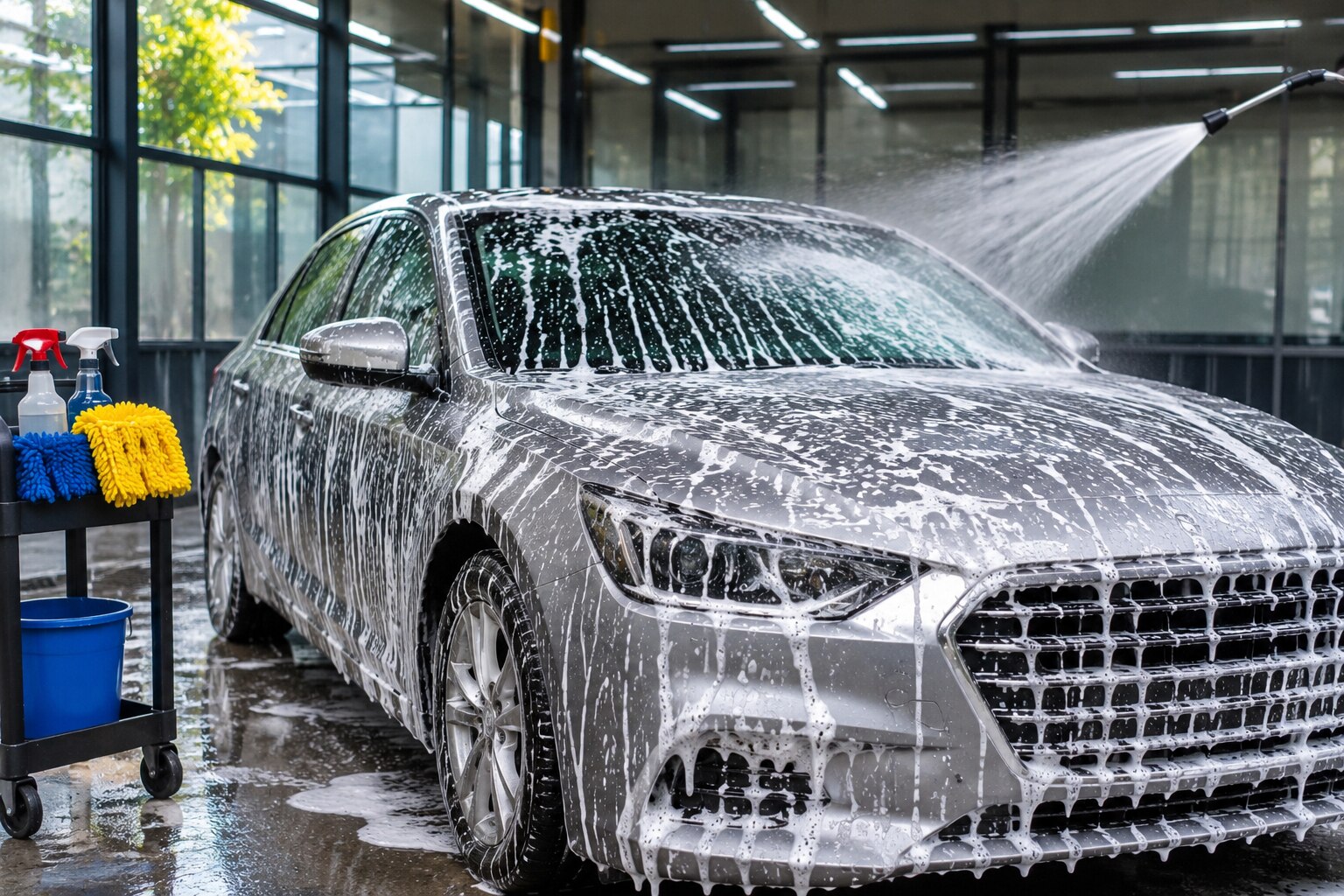
Book a professional wash when the car has more than loose dust and the first contact could grind grit into the paint. After a long highway trip, monsoon driving, construction work, or a heavily soiled commute in Delhi, choose a service that pressure-rinses or snow-foams the surface before using wash media.
Get a professional clean promptly after:
- Bird droppings, insect residue, or tree sap, which harden and bond to clear coat in Delhi’s heat.
- Road tar, cement dust, or oily pollution film, which a normal rinse will not remove.
- Monsoon mud packed into wheel arches, underbody areas, and panel gaps.
- Dust and sand covering a dark car, where a sponge or mitt can create fine marring.
- Water spots on paint or glass, especially after hard water evaporates in direct sun.
The practical rule for when to get car professionally washed is simple: use one when the contamination needs controlled pre-washing, safe chemical treatment, thorough drying, or equipment you cannot provide at home.
A car wash for heavily dirty car in Delhi is worthwhile only if it uses clean, separated wash media and dries the vehicle with clean microfiber towels or filtered air. Foam volume and speed prove nothing.
Ask whether the wash is pH-balanced and coating-safe if your car has ceramic coating, paint-protection film, or fresh wax. Avoid abrasive brushes, harsh degreasers, dry rubbing, and scraping; washing removes contamination, but detailing or paint correction is needed for scratches, oxidation, or a failing coating.
Follow a Safer Home-Washing Sequence for Light Dust
For light dust, the home washing versus car wash decision can favour your driveway if you have shade, clean equipment and time to dry the paint. A careful home wash can create less marring than a rushed service using reused brushes or a dirty mitt.
- Park in shade and let the panels cool. Work away from wind, direct sun and active construction dust.
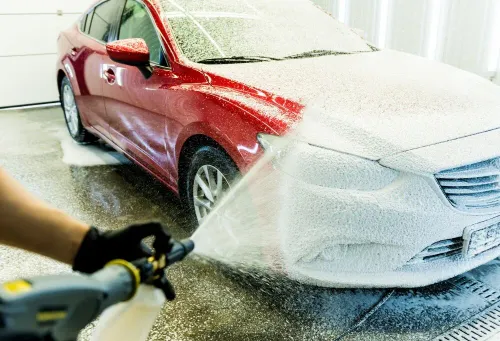
- Rinse the car from top to bottom to loosen loose grit. Do not wipe a dry dusty panel.
- Fill one bucket with car shampoo and another with clean water. Use a separate mitt and bucket for wheels and tyres.
- Wash one small panel at a time, starting at the roof and glass, then the upper body. Rinse the mitt in the clean-water bucket before collecting more shampoo.
- Keep lower sills, bumpers and wheel areas until last. Their grit can scratch cleaner paint if it travels upward.
- Rinse thoroughly, then dry immediately with clean, plush microfiber towels or a blower. Pat or glide lightly; never scrub.
Use a rinseless-wash method only with its stated dilution, plentiful solution and multiple clean towels. Avoid household detergent, old cotton rags, one-bucket washing and air-drying, which can strip protection, drag grit across clear coat or leave Delhi’s mineral and pollution deposits behind.
Check the Wash Process Before Handing Over Your Car
A glossy finish does not prove a safe wash. Ask to see the process before handing over the keys, especially if your car has ceramic coating, paint-protection film, fresh wax, dark paint, or expensive wheels.
1. Confirm the wash uses a pH-balanced car shampoo, a pre-rinse, and separate tools for paint and wheels. Reject abrasive brushes, household detergent, and strong degreasers; they can dull protection and mark clear coat.
2. Ask how the wheels will be cleaned. The wheels must be cool, and the operator should use wheel-safe chemical, dedicated brushes, and separate wheel-well tools. Hot wheels plus aggressive cleaner can stain alloy or painted finishes.
3. Check the drying method. Clean plush microfiber towels or filtered air are safer than letting Delhi’s hard water, dust, and pollution film evaporate on the body and glass. Confirm that towels are clean and not reused on dirty lower panels.
4. Inspect the site’s parking and drainage. A shaded wash bay, controlled runoff, and a clean drying area matter when your apartment parking is dusty, cramped, or poorly drained. Moving a wet car straight into construction dust defeats careful washing.
5. Ask whether contamination removal, clay treatment, or paint correction is included. A normal wash does not repair scratches, oxidation, water spots, or a failing coating.
These checks explain the professional car wash benefits in Delhi: consistent equipment, safer heavy-contamination handling, and proper drying. Ask Detailing Roadies By Car Stylein these questions before booking. Use the same checklist to decide when to get a car professionally washed.
Related product
 | Car Detailing Our professional car wash service in Gurgaon is designed to give your vehicle a spotless and fresh look. View product → |
Frequently asked questions
When is a professional car wash better than home washing in Delhi?
Choose a professional wash after construction dust, dried mud, oily traffic film, a highway trip or monsoon driving. Pre-rinsing or foaming must happen before contact washing.
What should you compare between home washing and a professional car wash?
Compare water access, labour, equipment, drying space and the operator’s washing sequence. A professional setup is more useful when your car needs controlled pressure and thorough drying.
When does a dirty car need more than a quick rinse?
Use more than a rinse when dirt has dried onto the paint, the car carries oily traffic film, or mud is packed around the wheels, lower panels and wheel arches.
What is the safer home-washing sequence for light dust?
Wash in shade, rinse loose dust first, use a clean wash mitt with suitable car shampoo, work from the roof downward, rinse the mitt often and dry with a clean microfiber towel.
Keywords