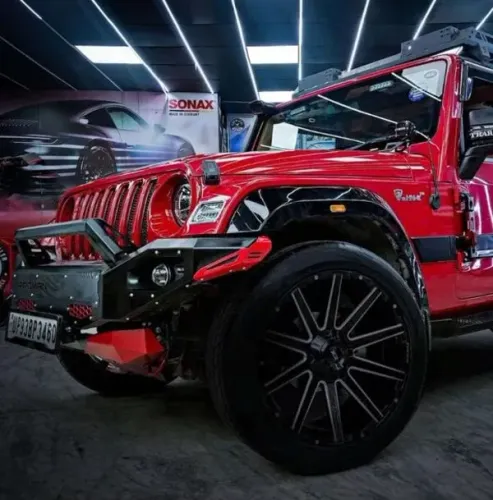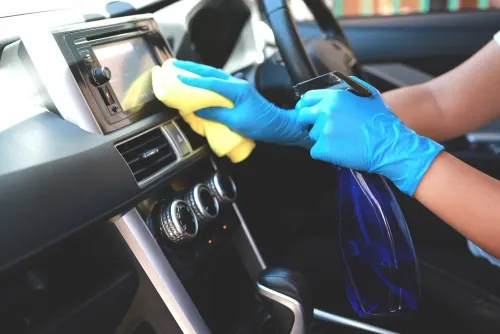
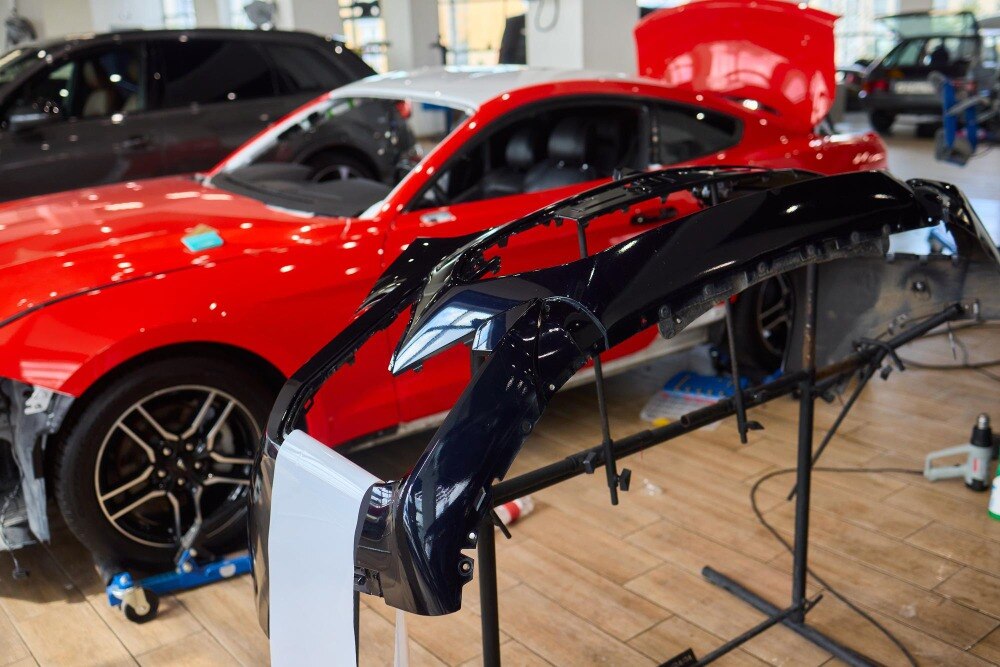
The work starts before any part is fitted: the workshop records the vehicle’s existing condition, confirms compatibility and agrees on the exact scope. By the end, you should understand each installation stage, the checks that protect your car, the paperwork that may matter, and the questions to ask before accepting delivery.
Key takeaways
- Request a condition report with photographs before installation starts.
- Confirm each part fits your exact variant and can be removed without damage.
- Check wheel clearance, lighting, sensors, films and fasteners before delivery.
- Collect product details, care instructions and invoices at handover.
What happens when your car arrives at the workshop?
Before work begins, a car exterior modification in Delhi starts with a condition survey, not a tool being picked up. The technician records the make, model, variant, model year and odometer reading, then photographs every panel, wheel and trim area from multiple angles.
The inspection identifies scratches, dents, stone chips, rust, lacquer failure, loose trim, uneven panel gaps and previously repainted sections. Paint-thickness readings help flag repairs where a wrap, PPF, paint correction or accessory removal could expose weak lacquer or an uneven substrate. Existing damage is marked on the job sheet and matched to photographs.
You then agree on a design brief: the intended finish, colour, parts, wheel and tyre choices, lighting changes, coverage limits and the desired level of reversibility. Ask the technician to explain whether the work involves paint, transparent PPF, colour-change vinyl, drilled fittings, bonding or replacement panels.
The written scope turns that discussion into a record. It should state:
- Parts to install, remove, retain or replace
- Panels and surfaces included, excluded or already damaged
- Preparation, painting, bonding, drilling and reassembly work
- Product model or batch number where available
- Expected finish, risks, warranty exclusions and customer approvals
Read it before signing. If a later scratch, cut edge or paint failure is disputed, dated photographs and the signed scope show what existed before the vehicle entered the workshop.
How are parts checked for compatibility and reversibility?
Installers verify the exact make, model, variant, model year, body style and VIN before selecting a part. They compare the manufacturer’s dimensions with the kit’s fitment guide, then check bolt pattern, centre bore, wheel offset, tyre size, suspension clearance and the locations of parking sensors, cameras, radar units and washer jets.
A dry fit exposes conflicts before paint or drilling. The installer checks panel curvature, mounting points, door and bonnet movement, wheel clearance at full steering lock and suspension compression, then records whether the original part can be refitted. That record defines reversibility in the car modification installation process.
| Installation method | What it means | Effect on reversibility |
|---|---|---|
| Bolt-on part | Uses existing threaded points, clips or brackets | Usually easiest to remove without permanent body damage |
| Replacement panel | Removes an original bumper, grille, bonnet or fender and installs another | Reversible if the original part is stored undamaged; paint matching can still be difficult |
| Drilled fitting | Creates holes for rivets, bolts or threaded inserts | Strong and repeatable, but leaves permanent holes and may expose metal to corrosion |
| Bonded component | Uses automotive adhesive or approved tape on prepared surfaces | Clean appearance, but removal can damage clear coat or paint |
| Custom fabrication | Measures and builds brackets, panels or trim for a non-standard fit | Fit depends on workmanship; cutting, welding or reshaping reduces reversibility |
If a modification changes the recorded colour, body type, dimensions or lighting, ask the registering authority about Section 52 of the Motor Vehicles Act before installation. A Delhi-NCR studio can fit a part without confirming that it is legal for your registration state.
What is the installation sequence for kits, wheels, spoilers and films?
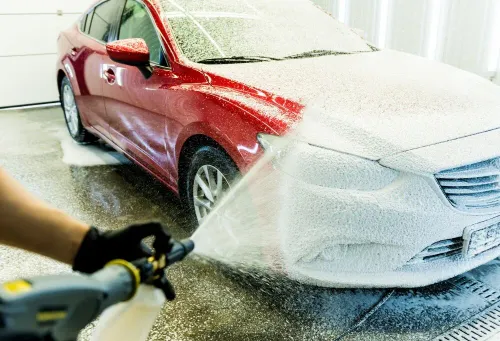
After washing, decontamination and paint correction where needed, the workshop masks vulnerable areas and checks that the surface is dry, smooth and free of loose trim. For car exterior modification for process in Delhi, this preparation prevents dust under film, poor paint adhesion and scratches caused by trapped grit.
- Technicians dry-fit the body kit, spoiler, grille or wheel set, mark mounting points and confirm panel gaps before drilling or applying adhesive.
- They remove only the badges, lamps, mouldings, handles, bumper sections or trims needed for clean access, recording clips and protecting exposed edges.
- They mask adjacent paint, fasten bolt-on parts to the specified torque, and bond components with the recommended adhesive or structural tape. Drilled parts receive corrosion protection around each hole.
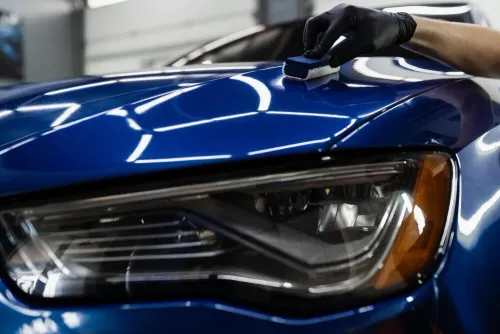
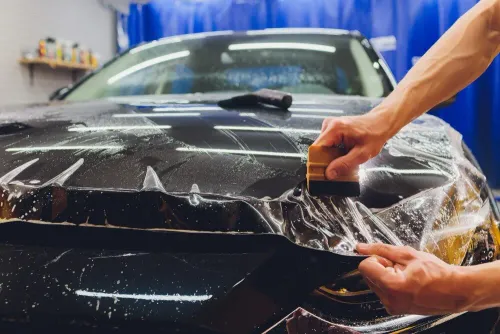
- Painted pieces move through sanding, primer, colour application and curing before reassembly. Film follows final cleaning: installers align, stretch or squeegee it onto the panel, wrap accessible edges, then trim with a guarded blade.
- The team refits trim and checks doors, bonnet, boot, lamps and sensors before the vehicle leaves.
| Option | Main time driver | Typical consequence |
|---|---|---|
| Painted kit or spoiler | Primer, paint and curing | Longest turnaround |
| Bolt-on wheels or parts | Fitment and torque checks | Faster if no drilling or refinishing is needed |
| PPF or colour-change vinyl | Panel complexity and disassembly | Faster than repainting, but edges and reassembly add labour |
Custom exterior car work takes longer when aged clips break, panels need repair or paint must cure. Film installation also needs a clean, temperature-controlled area; rushing it leaves lifted edges and visible seams.
What safety, legality and function checks happen before delivery?
1. The final inspection starts with mechanical safety. Technicians torque every wheel and body fastener to the manufacturer or component-maker specification, then check wheel width, offset, tyre load and speed ratings, brake-caliper clearance, steering-lock clearance and suspension travel.
The tyre must not touch the liner, suspension or body, protrude beyond the fender, or alter rolling circumference enough to affect the speedometer, ABS or traction control.
2. They inspect panel gaps, bonnet and boot release, door operation, number-plate mounting, washer jets and lamp aim. They also check for sharp projections, loose trim, paint damage, rattles and wind noise; a car that looks correct while stationary can still fail on the road.
3. A grille, badge, bumper insert, wrap seam or thick number plate can obstruct ultrasonic parking sensors, cameras or radar. The workshop should scan for diagnostic fault codes, test parking alerts, camera views and automatic emergency-braking or adaptive-cruise functions, then complete manufacturer-specified driver-assistance calibration after sensor or bumper removal.
4. A vehicle exterior customization Gurugram job does not automatically follow Delhi registration arrangements. If the car is Haryana-registered, ask the Haryana transport authority about changes to colour, body type, dimensions, lighting or other recorded specifications before delivery.
Section 52 of the Motor Vehicles Act restricts alterations that make the registration certificate differ from the manufacturer’s original specifications, subject to its statutory exceptions and approval processes. Keep the written inspection and calibration record.
What should you receive at handover, and how do you protect the finished work?
Do not drive away without a handover file. It should record the installed product, batch or model number, covered panels, excluded damage, dated photographs, replaced clips or parts, and any warning lights or calibration requirements. For custom exterior car work, this record separates installation damage from an old scratch or failed lacquer.
Ask the studio these questions before signing:
- What is the exact cure period for this film, coating or paint, and what temperature, rain or moisture restrictions apply?
- Which surfaces are covered, and are edges, sensors, badges, repaired panels or pre-existing dents excluded?
- Does the warranty exclude stone chips, accident damage, Delhi heat, pressure-washer use, harsh solvents, automatic brushes, staining or lifting at edges?
- Which shampoo, wash method and inspection interval protect the finish?
- If the colour changed, what must you update with the registering authority and insurer for a Delhi or Haryana vehicle?
A generic “wash after 24 hours” instruction is not enough; follow the product-specific sheet supplied by the installer. Keep invoices, photographs and coverage records with your insurance papers.
Detailing Roadies By Car Stylein should be asked to write these limits down for any car exterior modification in Delhi, including work carried out for a Gurugram-registered vehicle. Aim pressure-washer spray away from film edges and avoid abrasive cleaning until the stated cure ends.
Related products
 | Car Modification Enhance your car’s appearance with our professional car exterior modification services in Delhi & Gurugram. View product → |
 | Car Modification Looking for complete car modification services in Delhi? Detailing Roadies provides end-to-end solutions for both interior and exterior upgrades. View product → |
Frequently asked questions
What happens when a car arrives for exterior modification in Delhi?
The workshop records the make, model, variant, model year and odometer reading, then photographs the panels, wheels and trim before inspecting the car’s condition.
How are exterior modification parts checked for compatibility and reversibility?
Technicians match each part to the car’s exact variant, inspect mounting points and clearances, and confirm whether the installation can be removed without damaging paint, trim or wiring.
What is the installation sequence for kits, wheels, spoilers and films?
The sequence depends on the job, but workshops normally complete cleaning and preparation first, test-fit parts, install structural components, fit wheels and spoilers, and apply films after surfaces are ready.
What safety, legality and function checks happen before delivery?
The final inspection checks wheel clearance, tyre fitment, fasteners, lighting, sensors, doors, boot operation, visibility and other functions affected by the modification.
What should you receive at handover after custom exterior car work?
Collect the invoice, part and product details, care instructions, warranty terms and any records needed to maintain or reverse the finished work.
Keywords