A 30 ml or 50 ml bottle does not automatically match a hatchback, sedan or SUV, because actual consumption depends on paintable area, surface condition, coating layers and the panels included. By the end, you will be able to classify your vehicle, question a millilitre-based quote and identify the preparation and aftercare details that matter more than a larger bottle.
Key takeaways
- Choose size by paintable area, panels, height, and included surfaces.
- Ask for estimated product consumption, bottle size, and number of layers.
- Treat extra coating as useful only when preparation and curing are correct.
- Require Delhi-specific preparation, paint inspection, and warranty details in the quote.
What does coating size mean for your vehicle?
Coating size is a combined measure of paintable area, panel count, vehicle height, bodywork complexity, preparation time and the surfaces included in the package. It is not a measurement of engine capacity or a manufacturer’s body-style label.
| Vehicle type | What usually changes | Pricing implication |
|---|---|---|
| Compact hatchback | Shorter panels, lower height and fewer painted surfaces | Less product and correction than a sedan |
| Sedan | Longer sides, boot, roof and larger panel area | More preparation and coating work |
| Three-row SUV or large vehicle | Greater height, extra panels, roof rails, black cladding and trim | Longer work even when the painted footprint is hard to see |
Estimate for comparison by recording your vehicle’s approximate length, width and height. Do not multiply those figures and treat the result as paintable area: bumpers, mirrors, spoilers, wheel arches and glass do not follow a simple box shape.
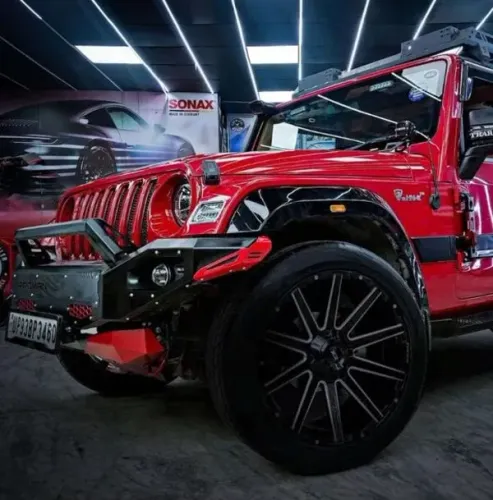
A compact hatchback usually needs less decontamination, paint correction and coating than a sedan. A three-row SUV can take longer because the technician must clean and prepare taller panels, roof rails, black plastic, gloss-black trim and additional edges.
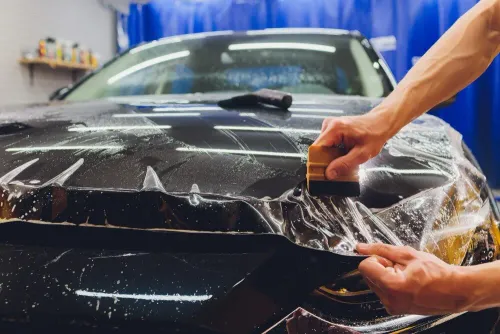
For a graphene coating for car in delhi, compare packages by the paintable area and preparation effort. Ask whether the package covers only painted panels or also bumpers, glass, wheels, exterior plastics and trim. Choose by the car’s actual surfaces and condition, not the badge on the boot.
How much coating does each vehicle size actually consume?
A 30 ml or 50 ml bottle is packaging, not a universal rating for a hatchback, sedan or SUV. For graphene coating options in delhi, ask for the manufacturer’s coverage rate, recommended wet-film or application rate, and stated consumption for one coat on a prepared vehicle.
Actual use changes with panel area, paint porosity, applicator technique, product removed during leveling and the number of coats. A second layer is not automatically included because the bottle contains unused liquid.
| Surface | Confirm before comparing quotes | Why it changes consumption |
|---|---|---|
| Painted body and bumpers | Whether both are included and whether the formulation is approved | Panel count, curves and paint condition vary |
| Gloss-black trim and exterior plastics | Whether the product is approved for each material | Plastic can absorb or react differently |
| Wheels | Whether faces, barrels or both are coated | Wheel design adds separate preparation and application |
| Glass | Whether the coating is approved for glass | Glass products use different chemistry and technique |
Ask the installer to state the product name, batch or lot, number of coats and every included surface when quoting millilitres. If the quote says small, medium or SUV, require definitions based on paintable area, vehicle height and included trim—not engine size or a badge.
Use manufacturer documentation to compare graphene coating options in delhi. Select the smallest package that covers the approved surfaces and stated coats, rather than assuming the largest bottle suits the largest vehicle.
Do a larger bottle or extra layer provide better protection?
No: the largest bottle does not improve protection by itself. Cured film thickness, preparation, flash time, controlled curing conditions, lighting and leveling determine the result; unused product in the bottle does not.
| Package | Correct interpretation | Risk or condition |
|---|---|---|
| One layer | One approved film | Best when the chemistry and coverage specify one coat |
| Two layers | Two approved films | Adds material and labour only if recoating is permitted and layer one has cured or flashed as instructed |
| Three layers | Three approved films | Adds protection only under the same written approval, timing and surface conditions |
Applying excess product or recoating too early can create high spots, disturb solvents in the first film and leave an uneven appearance. Dust, moisture, poor lighting and missed leveling make a larger kit irrelevant.
“Graphene coating” is not a regulated coating class. Products can use different resin systems, graphene oxide or graphene nanoplatelets, dispersion methods and concentrations, so a higher graphene percentage alone does not prove greater durability.
Choose the package that matches the manufacturer’s verified coverage and approved number of layers. Ask for the product name, coverage instructions and batch or lot information, then check:
- whether the package covers paint only or also trim, wheels and glass;
- the required flash, recoat and full-cure times;
- the allowed temperature, humidity and moisture conditions;
- what “9H,” “10H” or “lifetime” actually measures.
The right package is the smallest one that fully covers the approved surfaces under the written process—not the largest volume or strongest-sounding label.
How should Delhi conditions and paint condition change the choice?
A larger vehicle increases preparation, masking, panel-count and drying work; Delhi and Gurugram conditions do not justify buying a larger bottle. Fine dust, traffic film, outdoor parking, monsoon moisture, hard-water spots, seasonal sunlight and pollution increase washing and drying effort after application.
Use this sequence:
- Wash the vehicle thoroughly, including panel gaps, emblems and wheel arches.
- Remove iron contamination and tar where needed, then perform mechanical decontamination. Bonded contamination left underneath causes patchiness, weak bonding and early water-spotting.
- Inspect the paint under strong lighting. Deep scratches, stone chips, peeling clear coat, rust, oxidation and sanding marks require repair or correction first.
- Machine-polish only when justified; polishing adds time on larger vehicles and complex bodywork.
- Complete a panel wipe to remove polishing oils, then apply the coating in a clean, controlled area with suitable lighting, temperature and humidity.
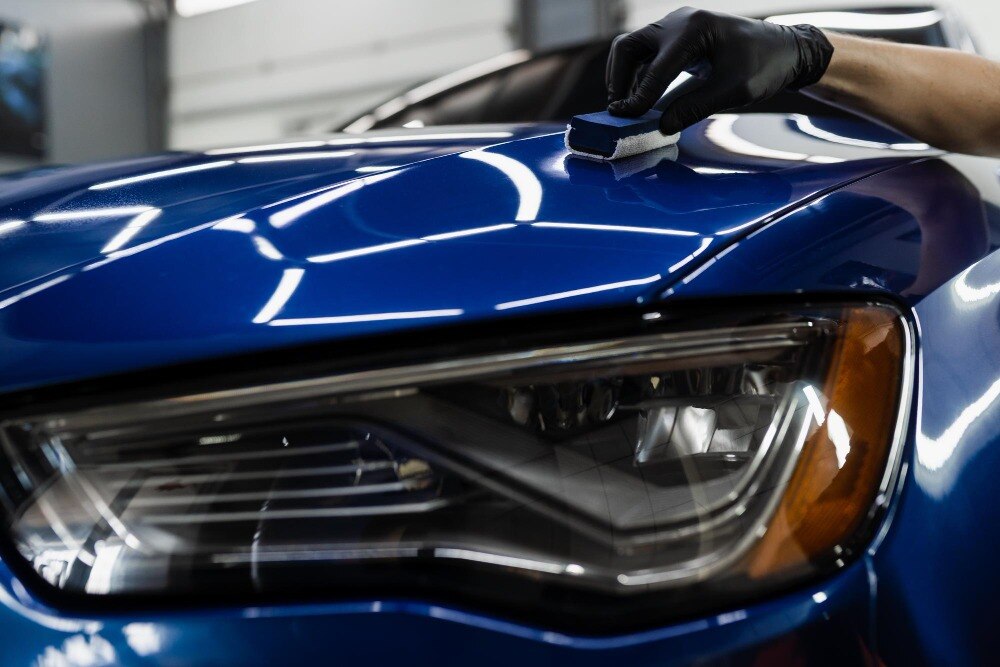
- Allow the stated flash, leveling and curing times, then restrict water exposure and follow the specified wash method.
Obtain the product’s technical sheet and written site clearance before coating repainted panels, matte paint, wraps, PPF, plastic trim, wheels or glass. A coating improves gloss, chemical resistance and cleaning; it does not stop stone chips or repeated rubbing, so high-impact zones need a separate PPF decision.
“Graphene paint protection gurugram” is a search location, not different NCR chemistry. Choose by paint condition, parking and impact risk—not the municipal boundary.
What should a Delhi coating quote include before you choose a size?
A fair quote turns “small” or “SUV” into a checkable scope. Require the installer to record:
- Vehicle category and approximate paintable area, or a written definition of the size category
- Paint condition and correction stage: wash, decontamination, polishing, or heavier correction
- Coated panels, plus separate inclusion or exclusion of wheels, glass and exterior trim
- Product name, batch or lot number, number of coats and approved recoat interval
- Expected downtime, initial water-exposure restriction and full-cure time
- Aftercare instructions, including approved wash chemicals and maintenance toppers
- Treatment of water spots and neglected contamination
- The process and warranty effect if a panel is later repainted
Use this comparison to challenge vague package labels:
| Quote wording | What you must verify | Why it matters |
|---|---|---|
| Small, medium or SUV | Vehicle dimensions, panel scope and category definition | Labels do not measure preparation effort |
| 30 ml or 50 ml | Manufacturer coverage rate, coats and included surfaces | Bottle size is packaging, not a vehicle rating |
| Two or three layers | Chemistry approval, flash or cure interval and added labour | Incorrect timing creates high spots and uneven leveling |
| Lifetime warranty | Inspection, maintenance, chemical and repaint exclusions | It is a maintenance contract, not impact protection |
A warranty does not cover stone chips, accidents or permanent beading. For customers comparing graphene coating options in delhi, Detailing Roadies By Car Stylein is worth comparing only if its written quote answers these questions and prices condition, surfaces and preparation rather than the badge.
Choose the smallest package covering every approved surface after correction, not the cheapest bottle.
Related product
 | Coating Experience next-level car protection with our graphene coating service in Delhi. View product → |
Frequently asked questions
What does graphene coating size mean for a vehicle?
It describes the vehicle’s paintable area, panel count, height, bodywork complexity, preparation needs, and surfaces included. It is not based on engine capacity or a body-style label.
How much graphene coating does each vehicle size consume?
Consumption depends on paintable area, panel shape, surface condition, product formula, application method, and the number of layers. Ask the installer for estimated usage rather than choosing only by bottle size.
Does a larger bottle or extra layer provide better protection?
No. A larger bottle does not improve protection unless the product is applied correctly. Extra layers help only when the product allows them and the installer follows its flash, curing, and preparation requirements.
How should Delhi conditions and paint condition affect the choice?
Delhi dust, traffic pollution, heat, monsoon moisture, and hard-water spotting make decontamination, paint correction, panel preparation, and curing conditions important. Choose the package after inspecting scratches, oxidation, repainted panels, and existing protection.
What should a Delhi graphene coating quote include?
Require the product name, bottle volume, estimated consumption, number of layers, included surfaces, paint correction steps, curing instructions, warranty terms, maintenance requirements, and the final price with taxes or additional charges identified.
Keywords