Sun exposure, improper washing and environmental contamination can gradually make automotive paint look dull. Fine scratches become visible under direct light, reflections lose clarity, and water spots may remain even after washing. Car exterior polishing can improve many of these problems, but it is important to understand what the process can realistically achieve.
Polishing is not the same as painting, coating or waxing. It is a controlled paint-correction procedure designed to refine the vehicle’s clear coat.
How Automotive Polishing Works
Most modern vehicles have a colour layer covered by a transparent protective clear coat. Swirl marks and light scratches often sit within this upper layer. Polishing uses carefully selected abrasives, pads and machines to level microscopic irregularities and improve the way light reflects from the surface.
The process can be adjusted according to paint hardness, defect severity and remaining clear-coat thickness. A mild finishing polish may be sufficient for relatively new paint, while older or neglected surfaces may need more correction.
Defects That Polishing May Improve
Professionally performed polishing can reduce the appearance of:
- Fine swirl marks
- Light wash scratches
- Mild oxidation
- Hazy or dull paint
- Certain mineral water spots
- Minor paint-transfer marks
- Uneven gloss
- Light surface scuffs
The degree of improvement depends on defect depth. A detailer should inspect the paint instead of promising that every scratch will disappear.
Damage Polishing Cannot Safely Remove
If a scratch catches a fingernail or exposes the colour coat, primer or metal beneath it, polishing is unlikely to remove it. Attempting excessive correction could thin the surrounding clear coat without repairing the damage.
Polishing also cannot correct:
- Dents or panel deformation
- Peeling clear coat
- Cracked paint
- Rust
- Deep stone chips
- Poor-quality repainting
- Severe chemical etching
- Paint missing from an affected area
These problems may require dent repair, touch-up work or panel repainting.
Why Preparation Matters
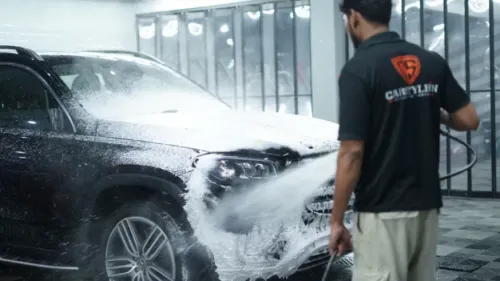
Applying a polishing machine to an inadequately cleaned vehicle can create additional scratches. The exterior should first undergo a safe wash and, where required, paint decontamination.
Professional preparation may include iron-particle removal, tar treatment and clay-bar cleaning. Masking sensitive rubber and textured plastic parts also helps prevent staining from polishing compounds.
Lighting is equally important. Defects that are difficult to see in ordinary indoor light can become obvious in sunlight. Inspection lamps help the technician evaluate progress more accurately.
One-Step and Multi-Stage Polishing
One-step polishing combines moderate defect reduction with gloss enhancement. It is often suitable for daily-driven vehicles with light or moderate imperfections.
Multi-stage correction uses a stronger cutting stage followed by one or more refining stages. It can produce greater clarity but requires more time and removes more clear coat. It should therefore be recommended only when the condition and paint measurements support it.
For many cars driven regularly in Delhi or Gurugram traffic, chasing a completely defect-free finish may not be practical. A balanced improvement that preserves paint for future maintenance can be the wiser option.
Protection Is Needed After Polishing
Polishing improves the surface but does not provide durable protection by itself. After correction, the paint can be protected with wax, sealant, ceramic coating or paint protection film.
The appropriate choice depends on parking conditions, annual mileage, maintenance habits and budget. Ceramic coating can make routine cleaning easier, while PPF adds physical impact resistance in vulnerable areas.
Detailing Roadies By Car Stylein assesses exterior condition before recommending a polishing level. For car owners across New Delhi, Delhi and Gurugram, this inspection-led approach helps distinguish removable surface defects from damage requiring body-shop repair.
Good polishing should improve clarity and gloss while respecting the limitations of the vehicle’s paint system.
Keywords