Purple discoloration usually points to ageing inside the film, but reflected light, adhesive failure, trapped moisture and the glass itself can create a similar appearance. You can separate these causes by inspecting the exposed and protected edges, checking for bubbling or haze, and comparing the film’s specifications before choosing cleaning, removal or replacement.
Key takeaways
- UV-damaged dyed film causes most purple tint in Delhi.
- Inspect the film edge and compare it with uncovered glass.
- Replace film when cleaning does not remove the purple colour.
- Check Delhi visibility rules before selecting new window film.
Why Automotive Window Film Turns Purple
A car window film for turning purple in Delhi usually has dye or colourant that has degraded inside a dyed polyester layer. Strong ultraviolet exposure and repeated heat cycling through Delhi’s hot months break down the dye, with low-cost dyed films generally changing sooner than well-manufactured metalized or ceramic films.
Purple colour does not prove that the film is stronger, darker, or more effective. It is a failure symptom, not a performance rating. A film’s heat rejection, ultraviolet protection, glare control, and visible light transmission depend on its construction and specifications—not on an attractive or unusual colour.
Purple car tint in Delhi can also result from causes unrelated to dye breakdown:
- Discoloured adhesive between the film and glass
- Dust, chemical residue, or moisture trapped under the film
- Optical interference from a multilayer film
- Reflected surroundings that change the apparent colour
- The underlying glass itself
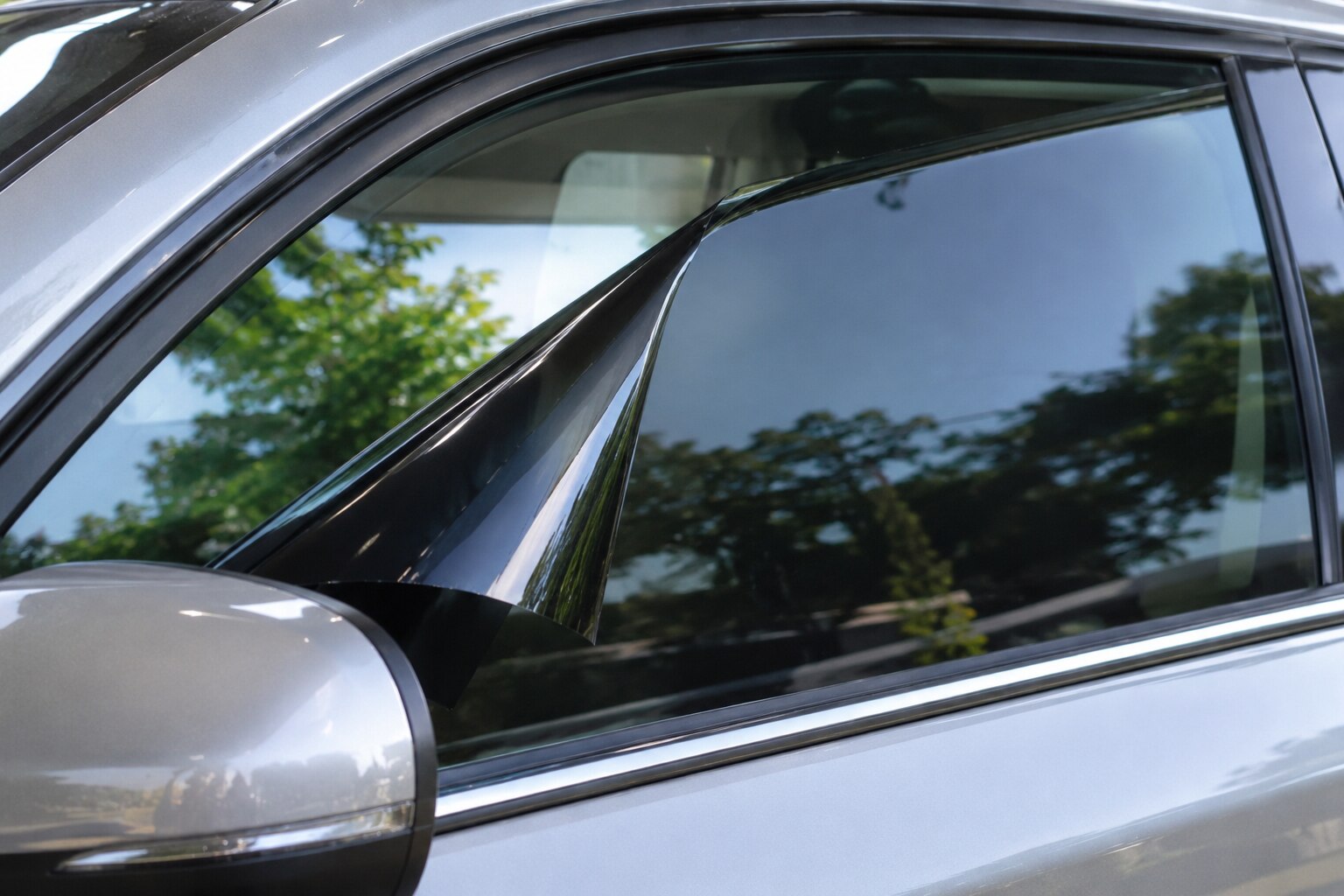
Compare the exposed centre with film hidden under the rubber gasket. A neutral-grey protected edge beside a purple exposed area points toward ultraviolet or heat damage. View the window in direct sun and shade before deciding. Haze, bubbles, edge lifting, cracks, streaks, or uneven density indicate a deteriorating installation, not stronger protection.
On the windscreen or front side windows, that deterioration can reduce contrast and increase night glare.
How to Confirm Whether the Film or Glass Is Discoloured
Inspect the glass from inside and outside the vehicle, then compare it with an unused window under direct sunlight and in shade. Purple car tint in Delhi is not confirmed by colour alone: reflections, dust, moisture, multilayer optical effects, or the glass itself can create a violet cast.
- Clean the inner and outer glass with a non-abrasive glass cleaner. If the purple patch disappears, the cause was surface contamination; polishing or abrasive rubbing can scratch the glass and film.
- Change your viewing angle and lighting. A neutral film that looks purple only from one angle points to reflection or optical interference, not necessarily film failure.
- Inspect the film surface, edges, defroster lines and corners. Look for bubbles, haze, streaks, scratches, edge lifting, shrinking, peeling, or an uneven colour gradient.
- Compare the affected pane with a window that receives less sun. A persistent, patchy colour change across the film, especially with bubbles or weakened adhesion, indicates film or adhesive deterioration.
- Ask for visible-light-transmittance readings at several points. Uneven readings support non-uniform fading or contamination, but the meter cannot identify dye, adhesive or glass discoloration, prove ultraviolet protection, or establish legal permission.
A purple film on the windscreen or front side window deserves an immediate night-time visibility check; glare, condensation and dust can reduce contrast even when daylight looks acceptable. Cleaning cannot restore chemically degraded dye or adhesive, so those signs point toward careful removal and replacement.
When Cleaning Cannot Restore a Faded Film
Cleaning or polishing cannot repair faded window film in Delhi when its dye or adhesive has degraded. Glass cleaner and gentle wiping can remove dust, road film, or residue; abrasive rubbing may clear a surface mark, but it cannot restore chemically damaged colour.
Treat these signs as evidence that the film and adhesive need removal, not another cleaning product:
- Purple or hazy patches that remain after cleaning
- Bubbles, cloudy areas, or moisture-like pockets between the film and glass
- Edge lifting, shrinking, peeling, or a visible uneven colour gradient
- A sticky surface, adhesive streaks, or film that pulls away in flakes
- Colour that changes across the pane instead of appearing as one reflection
Do not cover the failed layer with darker film. That hides the colour temporarily while the old film continues to delaminate, develop haze, and complicate later removal. A proper repair removes the failed film and adhesive before installing a replacement.
Rear glass requires extra care. Defroster lines and antenna elements are conductive tracks; aggressive razor scraping or forceful adhesive removal can break them. Ask the installer to use controlled heat, an appropriate adhesive remover, and a plastic tool where suitable. Persistent purple colour, bubbles, or haze after the stated curing period is not normal curing.
Fresh film can show mild moisture haze briefly, but it should clear within the manufacturer’s specified time.
What to Compare When Replacing the Film
Do not choose the replacement by shade alone. If car tint color changing in delhi has confirmed film failure, compare the film’s construction, visible-light-transmittance (VLT) rating, optical clarity, and written warranty. “Ceramic tint” is only a category label; it does not prove the material, series, or performance.
| Construction | What to compare | Main trade-off |
|---|---|---|
| Dyed polyester | Dye stability, edge-shrink resistance, and a warranty covering purple or uneven colour | Usually the lowest-cost construction, but degraded dye can create the same failure again |
| Metalized film | Metal layer, signal compatibility, VLT, and warranty against fading or bubbling | Strong heat rejection, but the appearance and metal content can affect antennas or toll tags |
| Ceramic film | Ceramic specification, VLT, haze or distortion rating, and colour-stability warranty | Avoids dye-based colour failure, but the label alone does not verify quality |
| Hybrid film | The dyed and metalized or ceramic layers used, plus separate warranty coverage | Performance depends on the actual layer combination, not the word “hybrid” |
Ask for the exact film series on the invoice, not “premium tint,” and request the manufacturer’s VLT figure for each window. The warranty should name colour stability, bubbling, peeling, shrinking, and adhesive failure, with its duration and exclusions. Also compare haze in direct sunlight and shade; a darker film is not automatically clearer at night.
A shop such as Detailing Roadies By Car Stylein should record the selected series and VLT before installation, so a future claim does not depend on guessing which film was fitted.
Related product
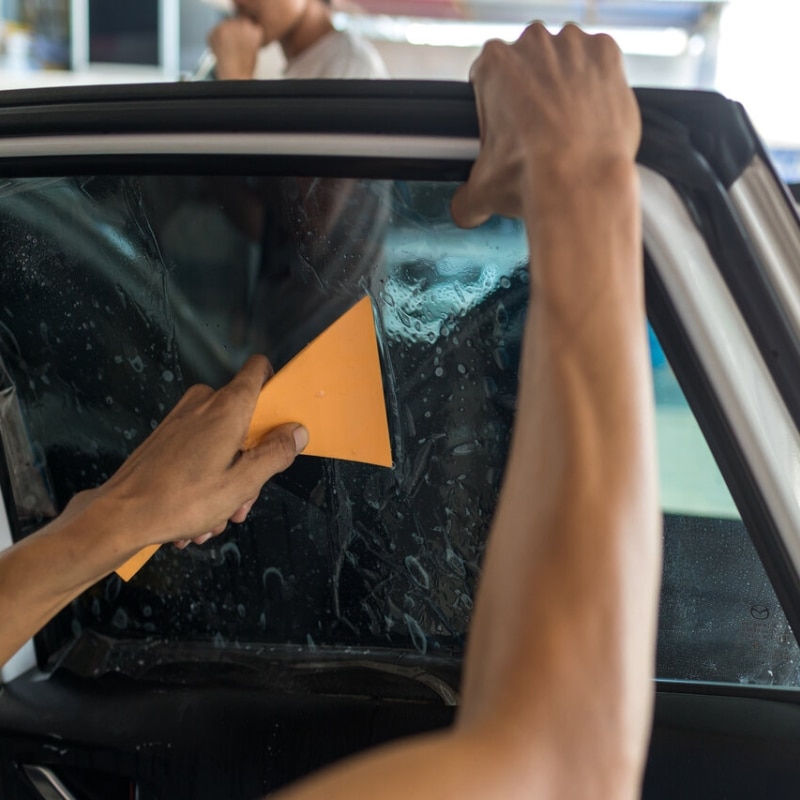 | Car Accessories Upgrade your driving comfort with our premium car window film installation in Delhi. View product → |
Delhi Compliance, Night Visibility and the New Film Checklist
Before installation, confirm whether the film is on the windscreen or front side windows. Reduced contrast, reflections and night glare there carry greater driving consequences, especially with dust, condensation or scratched glass. A car window film for turning purple in Delhi can look acceptable in sunlight yet impair vision after dark.
Delhi owners should ask the installer to check these points in writing:
1. Inspect the inside and outside of each pane in direct sun and shade. Compare it with an unused window and record haze, bubbles, edge shrinkage, peeling, streaks, scratches and uneven density.
2. Remove the failed film and adhesive completely. Do not cover purple car tint in Delhi with a darker layer; trapped adhesive and delamination can return as haze and make the next removal harder.
3. Confirm compliance with Rule 100 of the Central Motor Vehicles Rules and the Supreme Court direction against black films or other material applied to vehicle safety glass. A VLT meter reading alone does not legalise every aftermarket film, particularly on the windscreen and front side windows.
4. Obtain the film brand, construction, batch number, VLT specification, installation date and written warranty. The warranty should state coverage for purple colour change, bubbling, peeling, shrinking and adhesive failure.
5. Inspect the finished glass from the driver’s seat at night before accepting the car. Reject visible glare, distortion, patchy darkness or reduced recognition of vehicles, pedestrians and lane markings.
Frequently asked questions
Why does automotive window film turn purple in Delhi?
Dye inside low-cost polyester film degrades under ultraviolet exposure and repeated heat cycling, producing a purple or violet tint.
How can you tell whether the film or glass is discoloured?
Inspect the film edge, look for colour variation across the pane, and compare the tinted surface with uncovered glass.
Can cleaning restore faded purple window film?
Cleaning removes surface dirt but cannot restore dye that has degraded inside the film. Persistent purple colour requires replacement.
What should you check before replacing purple window film in Delhi?
Compare film construction, visible-light transmission, night visibility, heat performance, warranty details, and compliance with current Delhi requirements.
Keywords