Delhi’s traffic emissions, construction dust, intense sun, hard water and monsoon residue do not affect car paint in the same way. You will be able to match each hazard with the protection ceramic coating provides, recognise damage it cannot prevent, and decide what maintenance and application standards your vehicle needs.
Key takeaways
- Ceramic coating slows pollution bonding and etching but does not make paint invulnerable.
- Remove bird droppings, tree sap, and road grime quickly to limit clear-coat damage.
- UV protection slows fading and oxidation; it does not prevent stone chips or scratches.
- Use pH-neutral shampoo, soft wash media, and clean drying towels after application.
Which Delhi contaminants can ceramic coating resist or slow down?
A professionally applied ceramic coating forms a sacrificial, chemically resistant layer over the clear coat. That is the practical meaning of professional ceramic coating protection in Delhi: the surface reduces contaminant bonding and slows etching, but it does not neutralise pollution or make paint chemically invulnerable.
| Contaminant | What the coating does | Your response |
|---|---|---|
| Soot, PM2.5, road film and construction dust | Reduces adhesion after airborne pollution settles | Rinse and wash; never dry-wipe dusty paint |
| Industrial fallout and monsoon deposits | Slows chemical attack, especially when moisture remains on the panel | Remove deposits before they dry or bake on |
| Tree sap, bird droppings and insect residue | Buys cleaning time and makes residue easier to lift | Remove promptly; do not leave them for the coating to handle |
| Fuel spills and acidic or alkaline deposits | Slows staining and etching but cannot prevent them indefinitely | Flush the area immediately with water, then wash safely |
Contamination becomes more aggressive when mixed with moisture or baked onto a hot panel. Ceramic coating protection from pollution in Delhi therefore works best as a delay and release advantage, not as permission to postpone cleaning.
The coating does not remove PM2.5, nitrogen oxides or other pollutants from Delhi’s air. Prompt removal matters most for bird droppings, sap, insect residue, fuel, and acidic or alkaline deposits; leaving them in place can still etch coated paint.
What does ceramic coating dirt protection mean in Delhi conditions?
It means less dirt stays bonded to the paint after water contacts it, not that the car remains clean. Hydrophobic behaviour makes water sheet across or bead on the coating, carrying some loose dust and grime away and making a rinse easier. Ceramic coating dirt protection in Delhi is therefore reduced adhesion, not self-cleaning.
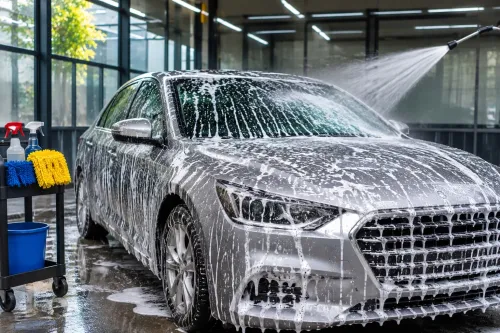
Delhi traffic film, roadworks and dusty parking will still cover the vehicle. Do not dry-wipe that dust: trapped grit can drag across the surface and create wash-induced marring. Use this sequence:
- Rinse the panels thoroughly to loosen and remove loose grit.
- Wash with a lubricated, coating-safe solution.
- Move clean microfiber media in straight passes, replacing it when dirty.
- Dry promptly with clean microfiber towels or an appropriate air blower.
Beaded water does not guarantee spotless paint. Mineral-rich water can leave hard-water rings as droplets evaporate, so ceramic coating protection from pollution in Delhi does not eliminate mineral deposits or the need for washing.
Traffic film and mineral contamination can also suppress beading while protective chemistry remains underneath; a professional should decontaminate and inspect the surface before declaring coating failure. A coating makes contamination easier to remove, not harmless to leave in place.
How does ceramic coating protect against Delhi sun, and what damage remains exposed?
Delhi’s ultraviolet exposure accelerates clear-coat oxidation, colour fading and gloss loss, especially when heat and neglected contamination add stress to the paint.
Car ceramic coating UV protection in Delhi comes from a cured barrier over the clear coat that improves resistance to this deterioration; it does not block every ultraviolet ray or reverse clear coat that is already oxidised, peeling or failed.
The coating is a sacrificial, chemically resistant surface layer, not armour. It does not reliably prevent:
- Stone chips
- Deep scratches
- Dents
- Vandalism
- Shopping-trolley damage
- Every swirl mark
Professional ceramic coating protection in Delhi improves surface resistance, but careful washing remains necessary. Use a rinse, lubricated wash solution and clean microfiber media instead of dry-wiping dust across the paint; that reduces light wash marring but cannot guarantee swirl-free panels.
For impact-prone areas, paint protection film is the more suitable technology. Apply that distinction to the front bumper, bonnet and mirrors, where flying stones and contact damage reach the paint with force that ceramic coating cannot absorb.
Covered parking also reduces heat and UV exposure, but it does not replace washing or prompt removal of bird droppings, sap and other deposits.
What does a professional ceramic coating installation involve?
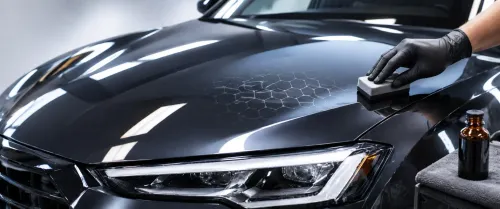
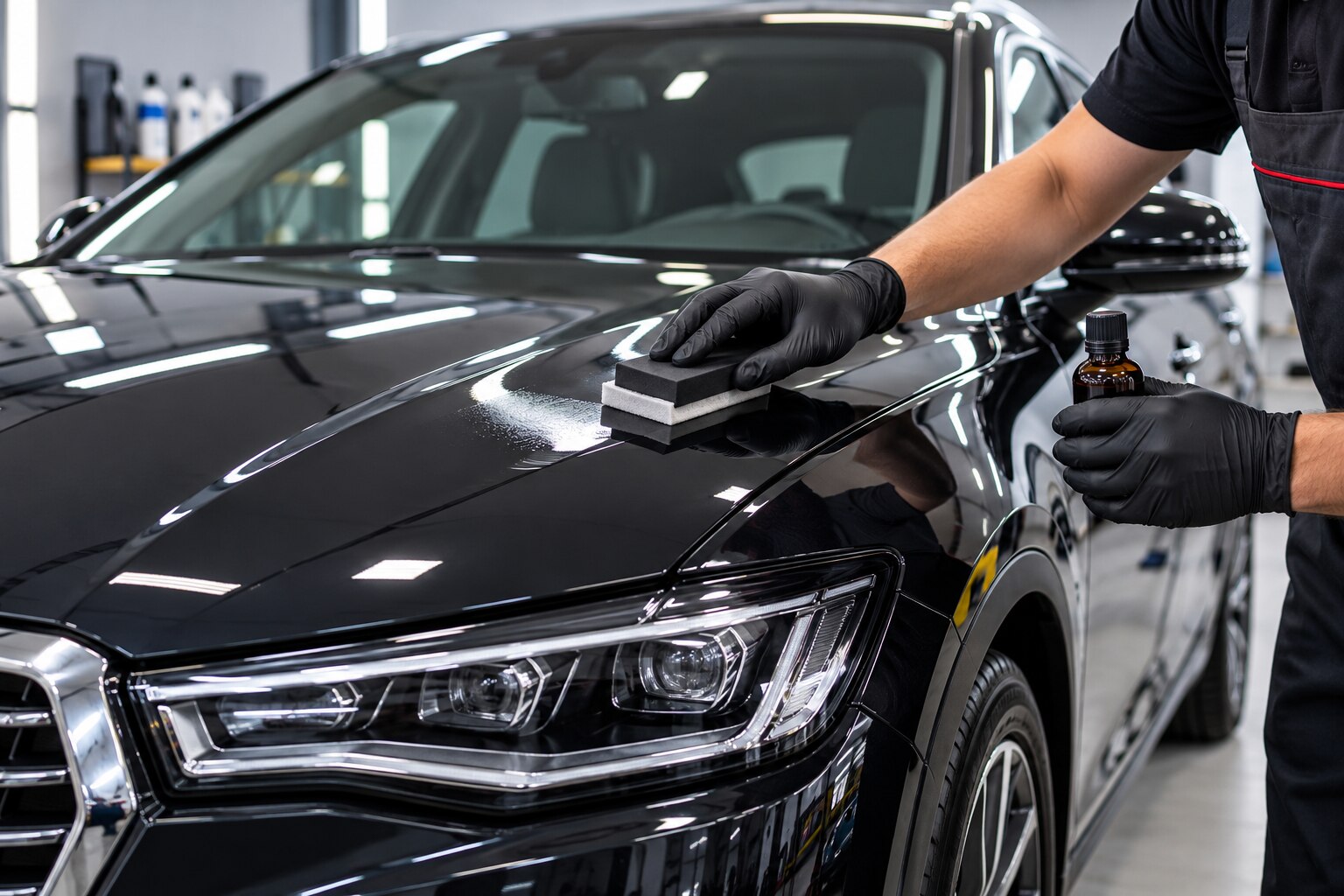
A professional installation is a preparation-and-curing process, not liquid spread over clean-looking paint. The aim of professional ceramic coating protection in Delhi is to bond a uniform sacrificial layer to properly prepared clear coat; it cannot hide defects permanently.
| Stage | What the installer does | Why it matters |
|---|---|---|
| Safe washing | Pre-rinses, washes with clean media and dries without dragging grit | Remaining grit can create fresh wash marks |
| Inspection | Checks paint under strong lighting for swirls, sanding marks and water spots | A coating can lock existing defects beneath its cured layer |
| Decontamination | Uses chemical treatment for iron and tar, followed by mechanical clay or equivalent removal | Bonded fallout prevents even coating adhesion |
| Paint correction | Machine-polishes defects when correction is appropriate | Coating does not remove scratches or etched spots |
| Panel wipe | Removes polishing oils and residue | Residue can cause bonding failure |
| Application | Applies controlled amounts panel by panel and watches flash time | Excess product or missed flash time creates streaks and high spots |
| Levelling and cure | Levels residue, then keeps the vehicle within the product’s specified initial cure conditions | Dust or water exposure can produce uneven gloss |
The installer must follow the coating manufacturer’s temperature, humidity, flash-time and cure instructions. Poor levelling leaves dark smears or patchy reflections, while early rain can disrupt a surface that has not cured.
If you compare Detailing Roadies By Car Stylein with another Delhi studio, ask both to explain preparation, product instructions, cure requirements and aftercare rather than comparing only promised service life or shine.
Related product
 | Coating Get long-lasting shine and protection with our car ceramic coating service in Gurgaon. View product → |
How should you maintain coated paint after application?
Keep the vehicle completely dry for the installer’s specified initial curing period. Water, dust or premature washing can interfere with levelling and leave high spots, streaks or uneven gloss while the coating is still setting.
After curing, remove bird droppings, tree sap, insect residue, fuel and chemical spills as soon as practical. These substances can still stain or etch coated paint; the coating gives you more cleaning time, not immunity.
Use this maintenance checklist:
- Rinse loose dust and grit before touching the paint.
- Wash with a lubricated, coating-compatible solution and clean microfiber media.
- Dry promptly with a clean towel rather than letting mineral-rich water evaporate.
- Never dry-wipe a dusty panel, because grit can drag across the surface and create wash marring.
- Park under cover when possible to reduce heat and UV exposure.
- Continue washing even when the car is parked indoors or beneath a covered bay.
- Treat hard-water rings with a coating-safe mineral-deposit remover; use professional treatment when deposits remain.
That routine supports ceramic coating dirt protection in delhi by reducing bonded road film, not by keeping the car permanently dust-free. Beading is not a durability gauge: traffic film or minerals can hide hydrophobic behaviour while underlying protection remains, so decontaminate before declaring failure.
Actual service life depends on product chemistry, preparation, washing technique, chemical exposure, parking and the maker’s maintenance instructions—not an advertised duration treated as a universal guarantee. The same discipline supports car ceramic coating uv protection in delhi.
Frequently asked questions
Which Delhi contaminants can ceramic coating resist or slow down?
It can reduce bonding from dust, traffic film, mineral deposits, bird droppings, tree sap, and pollution residue. Remove acidic or alkaline contaminants quickly because the coating does not prevent etching indefinitely.
What does ceramic coating dirt protection mean in Delhi conditions?
The hydrophobic surface helps water and loose dirt leave the paint more easily, reducing cleaning effort. It does not keep a car permanently clean or stop mud, dust, and oily road film from settling.
How does ceramic coating protect against Delhi sun?
The coating adds UV-resistant protection that slows clear-coat oxidation, fading, and gloss loss. It does not repair existing oxidation or protect against stone chips, deep scratches, or heat damage to unprotected materials.
What does a professional ceramic coating installation involve?
The process includes washing, chemical and mechanical decontamination, paint inspection, correction when required, panel preparation, controlled coating application, curing, and maintenance instructions.
How should you maintain coated paint after application?
Wash with pH-neutral car shampoo, a clean microfiber wash mitt, and separate wheels-and-paint tools. Dry with clean towels, remove bird droppings promptly, and avoid abrasive brushes and automatic car washes.
Keywords