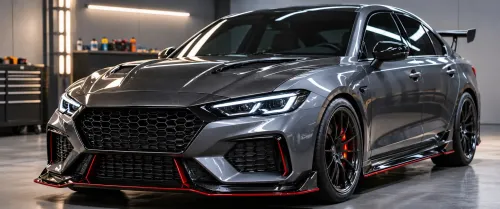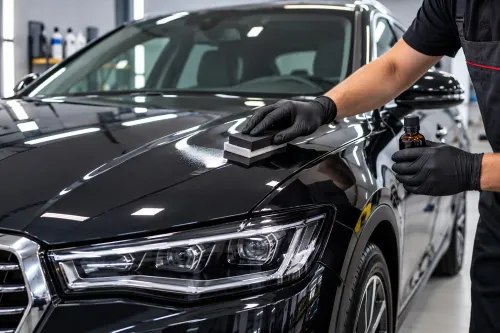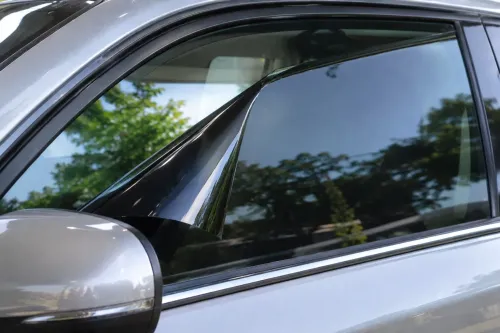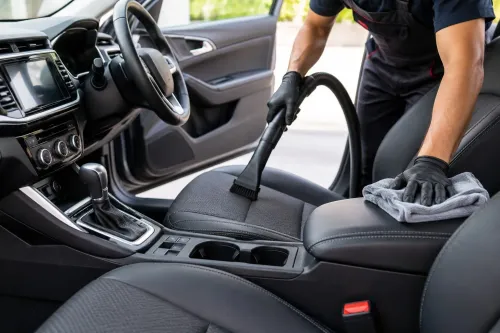
A graphene-labelled coating can make a performance car easier to wash and better protected against chemical contamination, but it will not stop a stone chip, deep scratch or parking impact. By the end, you will be able to match the coating with Delhi driving conditions, choose between coating and PPF, and identify the preparation and maintenance that determine the result.
Key takeaways
- Choose graphene for gloss, chemical resistance and easier grime release—not impact protection.
- Use PPF on impact zones such as the front bumper, bonnet and mirror caps.
- Inspect paint, remove defects and decontaminate before applying any coating.
- Maintain the coating with safe washing and remove mineral deposits before they dry.
When does graphene coating suit a performance car in Delhi?
A graphene coating for performance cars in Delhi suits you when your priority is gloss, water repellency, easier grime release and resistance to chemical contamination—not impact protection. It helps manage dust, traffic pollution, intense sun, monsoon moisture and mineral-rich wash water, but it does not stop dust settling or water spots forming when droplets dry.
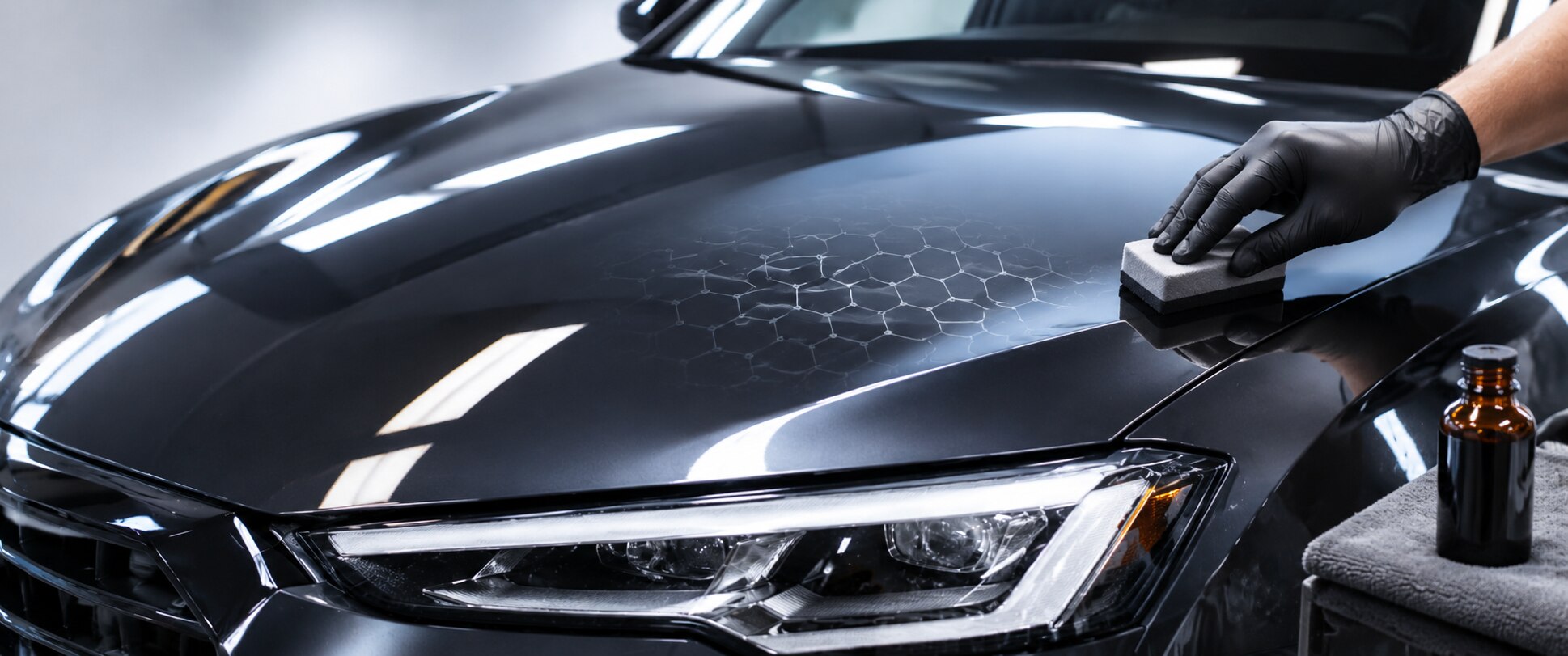
Most products sold as graphene coating are ceramic or organosilane hybrids: a silicon-dioxide or organosilane film with a small graphene or graphene-oxide additive. The label alone does not prove superior durability. The same applies to graphene coating for sports cars; compare the technical data sheet, preparation process and warranty rather than the word “graphene.”
Performance-car heat needs careful interpretation. Ask for the technical data sheet’s application and operating limits. A coating rated for hot painted body panels is not automatically suitable for exhaust components, brake hardware or engine-bay surfaces.
A coating can help resist:
- Some traffic-film and chemical contamination
- Bird-dropping etching when removed promptly
- Fuel residue and brake-dust staining
It cannot prevent rocks, deep scratches, dents, door impacts or rubbing damage. For a Delhi car exposed to road debris, a coating alone is sensible only when easier washing and appearance matter more than impact protection; high-risk panels need a separate physical barrier.
How should you compare graphene coating with PPF, ceramic coating, wax and sealants?
Choose by the damage you want to prevent, not by the word “graphene.” For performance car paint protection in Delhi, the best coating for performance cars depends on whether you value impact protection, gloss, chemical resistance, water behavior, low maintenance, appearance, or budget.
| Option | Strength | Trade-off |
|---|---|---|
| Graphene-labelled coating | Gloss, water repellency, grime release and some chemical resistance | Durability and chemistry vary; the label does not prove superiority |
| Ceramic coating | Similar gloss, chemical resistance and easier washing | Product-specific durability; no meaningful stone-chip protection |
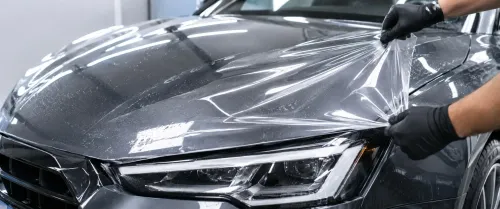
| PPF | Physical protection from stones, sand and light road debris | Higher cost and visible film edges if poorly installed |
| Wax | Low commitment and simple reapplication | Shorter service intervals and weaker chemical resistance |
| Sealant | Easier application than a coating with longer service than many waxes | Less durable than a professional coating and no impact protection |
For a sports car, PPF is the stronger choice on the front bumper, bonnet leading edge, front fenders, mirror caps and rocker panels. Apply a compatible coating to exposed paint outside those impact zones; an approved coating can also go over PPF to improve cleaning and water behavior.
Check the product’s technical data sheet instead of comparing labels. “9H” is a pencil-hardness designation, not proof that the finish is scratch-proof. A graphene or ceramic coating suits an owner prioritising gloss, chemical resistance and easier washing; PPF suits impact protection, while wax or sealant suits a smaller budget and easier reapplication.
Can graphene coating be applied safely to your car’s existing finish?
Yes, graphene coating can be applied safely when the existing finish is stable, compatible and properly prepared. It will not repair defects; coating over them preserves swirl marks, sanding marks, water spots and holograms in the reflected image.
- Inspect paint depth, oxidation, swirl marks, sanding marks, holograms, stone chips, repaint history, clear-coat failure and panel alignment. Thin paint, peeling clear coat, poor panel gaps or uncertain repaint work require correction before coating.
- Wash the car thoroughly, then remove tar and iron particles. Use clay treatment only when bonded contamination remains after chemical decontamination; unnecessary claying can create marring.
- Machine-polish panels that need correction. Do not polish through thin clear coat or attempt to disguise failing lacquer.
- Wipe every panel with a residue-free panel wipe before application. Oils, polish residue and solvent contamination can weaken bonding and create patchy curing.
Gloss factory paint is the simplest surface to coat, including factory-new paint after inspection and safe preparation. Matte or satin paint and satin wraps need an appearance-preserving product made for that finish; a gloss coating can create uneven shine.
Vinyl wraps and carbon-fibre panels require approval from the material or vehicle manufacturer before using a graphene coating for enthusiast cars. Textured plastics need a product specifically rated for textured trim. Recently repainted panels must be fully cured and free from solvent entrapment, sanding residue and polishing defects.
Owners considering graphene coating for sports cars should obtain the paint shop’s cure guidance before application.
What maintenance does a coated performance car need after application?
Application conditions determine whether the coating bonds evenly. The installer must control panel temperature, humidity and airflow, then follow the product’s technical data sheet for its flash or wipe-off window; rushing that stage can leave high spots, streaks or weak coverage.
Before collecting the car, confirm these points:
- The exact dry period: how long the paint must remain protected from rain, dew and washing.
- The initial cure period: when normal washing, detergents and driving can resume.
- Washing restrictions: whether pressure washing, shampoo, covers or parking outdoors are prohibited during curing.
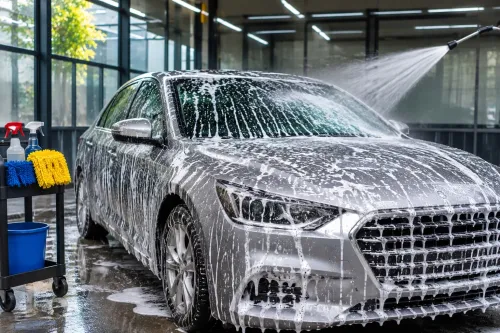
- A pH-balanced shampoo, clean microfiber towels and a low-abrasion wash method. Dirty automatic brushes and contaminated towels create marring.
- Prompt drying after washing. Tight water beads can still dry into hard-water rings when Delhi’s mineral-rich droplets sit in direct sun.
- Periodic removal of bonded iron, tar and mineral deposits. A coating reduces soil adhesion; it does not stop dust, pollution or water deposits from settling.
Track use demands faster intervention. Remove brake dust, rubber and tar soon after each session, using wheel-specific high-temperature products and safe wheel-cleaning practice; the coating does not replace either. Strong detergents, dirty brushes, aggressive scrubbing, mileage and repeated chemical exposure can reduce beading and grime release without proving total coating failure.
This graphene coating for enthusiast cars is not maintenance-free or permanent. For performance car paint protection in Delhi, disciplined washing and decontamination preserve surface behaviour far better than relying on water repellency alone.
What coating and protection plan should you request for a performance car?
Specify the protection zones before choosing a product. For performance car paint protection in Delhi, request PPF on the front bumper, bonnet leading edge, front fenders, mirror caps, rocker panels and other lower-body areas exposed to stone impact. Apply a compatible ceramic or graphene-labelled coating to remaining paint and approved PPF surfaces.
A coating alone is the more defensible choice when your priorities are gloss, easier washing and chemical resistance, not stone-chip protection. There is no universally best coating for performance cars; compare the installer’s process, product evidence and warranty.
- Ask for the product technical data sheet, including application temperature, humidity, flash or wipe-off window and operating limits.
- Require washing, tar removal, iron-particle removal, clay treatment where needed, machine polishing and residue-free panel wiping.
- Request paint-depth readings and a written inspection of swirls, sanding marks, chips, oxidation, repainting and clear-coat failure.
- Confirm compatibility with gloss, matte or satin paint, vinyl wraps, PPF, carbon fibre and textured plastics.
- Ask how panel temperature, airflow and humidity will be controlled during application.
- Get written dry-time, initial-cure and washing restrictions.
- Confirm maintenance shampoo, topper, decontamination and inspection requirements.
- Define warranty failure precisely: loss of water behavior, coating failure, peeling, staining or something else.
Use this checklist to compare Detailing Roadies By Car Stylein with other Delhi installers rather than treating a product label as proof of superiority.
Related products
 | Coating Experience next-level car protection with our graphene coating service in Delhi. View product → |
 | Coating Get long-lasting shine and protection with our car ceramic coating service in Gurgaon. View product → |
Frequently asked questions
When does graphene coating suit a performance car in Delhi?
Choose graphene coating when you want gloss, water repellency, easier grime release and resistance to traffic pollution, chemicals, sunlight and wash-water minerals. It does not prevent stone chips, scratches or dried water spots.
How does graphene coating compare with PPF, ceramic coating, wax and sealants?
PPF provides physical impact protection against stone chips and scratches. Ceramic and graphene coatings protect the surface chemically and improve gloss and cleaning. Wax and sealants cost less and are easier to replace but usually provide shorter-term protection.
Can graphene coating be applied safely to an existing finish?
Yes, if the paint is inspected, washed, chemically decontaminated, clayed where needed, polished to the required level and wiped with panel prep before application. Existing scratches and etching remain visible unless corrected first.
What maintenance does a coated performance car need after application?
Wash with a pH-neutral shampoo, clean using soft microfiber tools, avoid automatic brush washes and dry before mineral-rich water evaporates. Remove bird droppings, insects and industrial fallout promptly.
What protection plan should you request for a performance car?
Request a paint inspection, correction plan, named coating product, preparation steps, curing instructions, aftercare schedule and inspection of high-impact areas. Combine coating with PPF on vulnerable panels when stone-chip protection matters.
Related product
 | PPF Protect your car’s paint with our high-quality Paint Protection Film (PPF) service in Gurgaon. View product → |
Keywords