
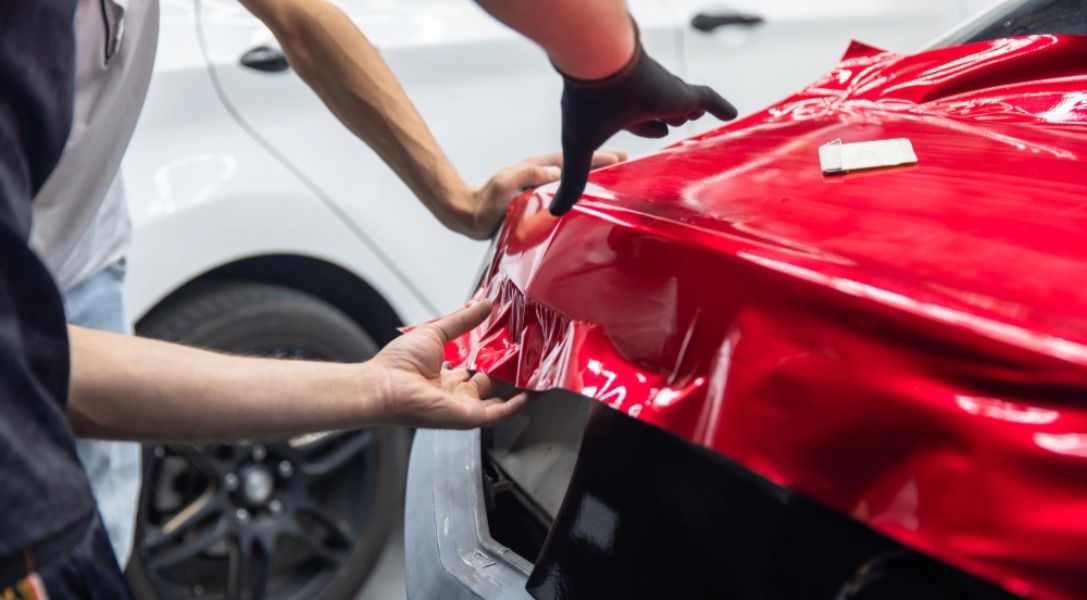
Changing a car’s colour or finish does not always require repainting. Professional car wrapping services use automotive vinyl to alter the exterior appearance while leaving the underlying paint largely unchanged. Wraps can provide gloss, matte, satin, metallic or other specialized finishes, but they are not automatically suitable for every vehicle.
For car owners in Delhi and Gurugram, the choice between wrapping and repainting should be based on paint condition, desired lifespan, budget and future plans for the vehicle.
When a Vinyl Wrap Makes Sense
A wrap can be a practical option when the original paint is in good condition and the owner wants a reversible appearance change. It is also useful for adding accents to selected areas such as the roof, mirrors or bonnet.
Owners commonly choose wrapping to:
- Change the vehicle’s colour temporarily
- Create a matte or satin finish
- Add contrasting design elements
- Refresh the appearance without full repainting
- Apply business branding to fleet vehicles
- Preserve the original colour for future resale
Vinyl can provide some resistance to minor surface wear, but it should not be treated as a substitute for paint protection film. PPF is specifically developed for impact protection and is generally thicker.
When Repainting May Be Better
Wrap film follows the surface beneath it. Dents, peeling clear coat, corrosion and deep scratches may remain visible or affect adhesion.
Repainting may be more appropriate when:
- The existing paint is badly damaged
- Rust treatment is required
- Panels have significant chips or peeling
- A permanent colour change is wanted
- Body repairs are already necessary
- The substrate is unsuitable for wrapping
Fresh repainting may also need sufficient curing time before vinyl is applied. Installing too early can create adhesion or removal risks.
Comparing Wrap and Paint
Reversibility
A professionally installed wrap can usually be removed, allowing the original colour to return. Paint is a permanent modification.
Finish Options
Wraps offer a broad range of finishes without complex paint mixing. Repainting, however, may produce greater depth and permanence when performed to a high standard.
Installation Time
Wrapping may be completed faster than a full quality repaint, although the time depends on vehicle size, panel complexity and necessary preparation.
Maintenance
Both require careful washing. Harsh chemicals, abrasive tools and pressure washing close to wrap edges can shorten vinyl life.
Surface Protection
Vinyl offers limited protection from environmental exposure and light wear. It does not provide the same stone-chip resistance as quality PPF.
Common Wrapping Mistakes
Poor preparation is one of the main causes of failure. Wax, grease, dirt or contamination can interfere with adhesion. Excessive stretching around complex shapes may also cause film to lift later.
Other warning signs include visible cutting damage, poorly aligned seams, trapped contamination and insufficient attention around handles, sensors or trim.
Colour changes may also be subject to documentation or regulatory requirements. Vehicle owners should verify applicable registration and compliance obligations before making a major exterior colour change.
Choosing a Suitable Service
Before approving a wrap, inspect film samples in daylight and indoor lighting. Ask how edges will be finished, whether parts need removal, how existing defects will be managed and what aftercare is required.
Detailing Roadies By Car Stylein provides wrapping assessments for personal, luxury and corporate vehicles across New Delhi, Delhi and Gurugram. The vehicle’s current paint condition should guide whether wrapping, partial styling or repainting is the more appropriate route.
Vinyl wrapping is valuable when the goal is customization with flexibility. Repainting remains the stronger option when the original surface needs structural restoration or the owner wants a permanent finish.